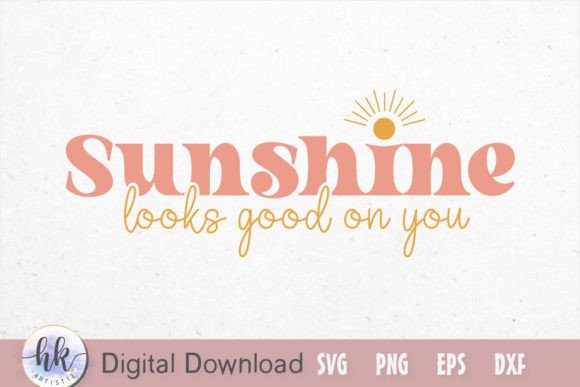
Sunshine Looks Good on You: A Designer’s Embroidery Review
When I sit down to evaluate a new digital asset for my studio, I am rarely looking for just another pretty picture. I am looking for viability. I need to know if a design will hold up under the needle, translate well across different fabric textures, and ultimately sell as a high-quality handmade product. Today, I am putting that critical eye toward a file titled "Sunshine Looks Good on You." Marketed primarily within the Crafts and Graphics categories as a "Baby Retro SVG," this piece promises a specific aesthetic—one that blends nostalgic warmth with modern positivity. But does it work when converted from a flat vector into a tactile machine embroidery design? Let’s break down how this embroidery project performs in real-world scenarios.
First Impressions: Mood and Visual Personality
The title alone sets a tone of optimism, but visually, the "Retro" descriptor is doing the heavy lifting here. From a designer’s perspective, retro themes are tricky. They can easily veer into kitsch if not balanced correctly. This design appears to lean into that cheerful, mid-century inspired vibe that is currently dominating the craft business landscape. The layout suggests a central graphic element paired with the inspirational quote, creating a balanced composition that feels both casual and intentional.
What stands out immediately is the potential for thread colors. Retro palettes often rely on muted yellows, soft teals, or warm creams. These colors tend to photograph beautifully for printable mockups and Etsy listings, which is crucial for any Etsy seller trying to stand out in a crowded feed. The visual personality is friendly and approachable, making it an ideal candidate for personalized gift items where emotional resonance matters more than technical complexity.
Real-World Application: Where This Design Shines
In my experience, the success of an embroidery file is determined by its application. "Sunshine Looks Good on You" has a versatility that makes it a strong contender for several key product lines. Here is how I see it performing in actual production runs:
- Baby Embroidery & Nursery Decor: The gentle, positive message fits perfectly on muslin blankets, burp cloths, or nursery wall hangings. The retro aesthetic pairs well with organic cotton fabrics common in baby gear.
- Tote Bag Design: Canvas totes are a staple for small shop product sellers. This design offers enough visual weight to look substantial on a large canvas surface without overwhelming the bag’s structure.
- Sweatshirt Embroidery: For autumn or spring collections, a crewneck sweatshirt provides a textured background that adds depth to the stitching. The design’s likely moderate size allows it to sit comfortably on the chest or back yoke.
- Applique Design Potential: If the source file includes distinct shapes, this could be executed as an applique design, adding a layer of dimension that elevates the perceived value of the item.
Furthermore, because the description mentions it is perfect for crafting projects, it lends itself well to holiday embroidery collections. Imagine this stitched onto a tea towel for a housewarming gift or on a pillow cover for a wedding present. The broad appeal reduces risk for designers who want to create inventory that isn’t tied to a single, narrow niche.
Technical Considerations and Stitch Execution
As a reviewer, I must address the mechanics. Even the best-looking graphic can fail if the digitization (or conversion) ignores stitch mechanics. When evaluating this for commercial use, you must consider the stitch density.
If the design relies heavily on fill stitch areas, ensure your machine can handle the thread load without puckering the fabric. Conversely, if it uses mostly satin stitch borders and running stitch details, it may be more forgiving on delicate fabrics. I always advise testing the design on scrap fabric first. Pay close attention to how the stabilizer interacts with the base material. For stretchy knits like those used in baby clothes or sweatshirts, a cut-away stabilizer is usually non-negotiable to prevent distortion.
Another critical factor is the hoop size. While the source file is listed at 6x6 inches, remember that embroidery software often scales designs. Ensure the final stitched dimensions fit your intended product. A design meant for a small chest pocket might look lost on a large tote, while one sized for a tote might look cluttered on a cap.
Where to Exercise Caution
No design is universal, and "Sunshine Looks Good on You" has specific limitations based on its style and likely detail level. There are certain contexts where this design should be used carefully:
- Small Hoop Sizes: If the design contains fine text or intricate retro patterns, shrinking it too much can result in muddy stitching. Tiny lettering is particularly prone to tangling and loss of definition.
- Textured or Thick Fabrics: On heavily textured fabrics like bouclé or thick wool, the definition of the design may get lost. The needle may struggle to penetrate dense weaves, leading to skipped stitches.
- Dark Fabric Backgrounds: If the design relies on light-colored threads for contrast, using it on dark fabric without proper underlay or backing can make the image appear washed out. Test color combinations rigorously.
- Curved Surfaces: Applying this to caps or curved hat fronts requires advanced hooping techniques. If the design has rigid geometric elements, they may distort unnaturally around the curve.
- Frequent Washing: For items like aprons or kitchen towels that undergo heavy laundering, ensure the design is anchored well. Loose ends or insufficient trimmings can lead to premature wear.
Impact on Brand and Customer Trust
Using a well-executed design like this affects more than just the look of the item; it impacts brand consistency and customer trust. A clean, crisp stitch job signals professionalism. When a buyer receives a finished product that looks polished, they are more likely to leave positive reviews and return for future purchases. In the world of custom apparel and digital product sellers, reputation is everything.
Additionally, the inspirational nature of the phrase "Sunshine Looks Good on You" adds an emotional layer. It transforms a simple embroidery project into a token of encouragement. This is a powerful selling point for gifts. Customers aren't just buying a stitched logo; they are buying a sentiment. This increases the perceived value and justifies higher price points in your commercial embroidery catalog.
Final Verdict for the Creative Entrepreneur
"Sunshine Looks Good on You" appears to be a solid addition to the toolkit of any creative entrepreneur focusing on lifestyle and baby products. Its retro charm and positive message align well with current market trends. However, success depends on execution.
Before committing to bulk production or listing it on your shop, I recommend the following workflow:
- Import the EPS/SVG into your embroidery software and inspect the stitch paths.
- Create a black-and-white mockup to check contrast balance.
- Stitch a test sample on the exact fabric you plan to sell.
- Verify licensing terms to ensure you are allowed to sell finished goods made from this digital embroidery file.
If these steps check out, this design has the potential to become a reliable bestseller for your craft business. It balances aesthetic appeal with practical usability, making it a worthy investment of your time and resources.